Physical Address
Kigali, Rwanda
Gasabo, Kimironko
Physical Address
Kigali, Rwanda
Gasabo, Kimironko
I remember the first time we were asked to develop our concepts for a studio project in class.You could tell from a mile away that we had no idea what we were expected to do, and when the prof tried to explain to us what concepts are and what some examples could be, we really didn’t get the hang of it.
We heard anything could be a concept and ran with it–we had butterflies, fish, oranges, flowers, and even small intestines as our concepts lol!
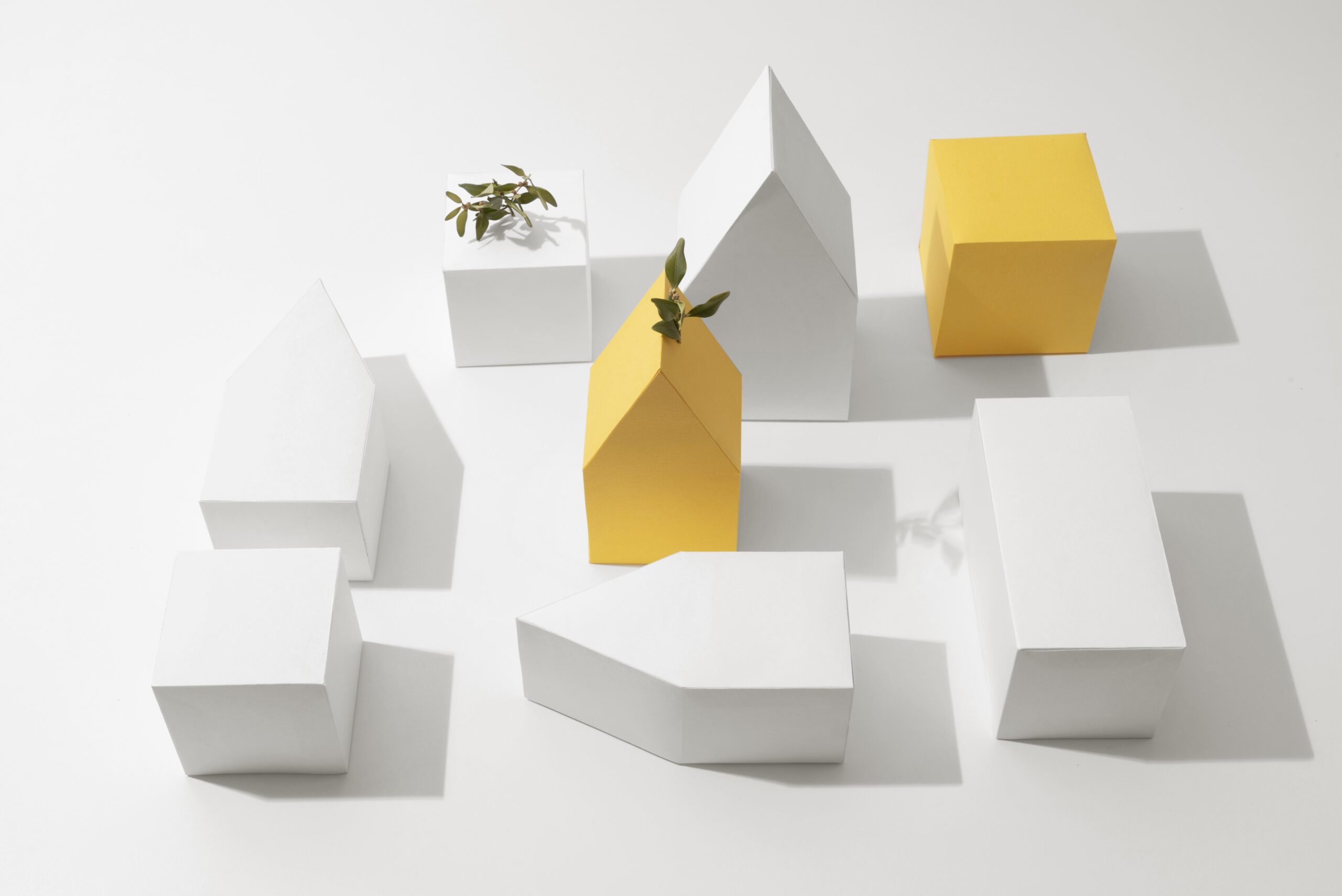
What I have realized years later is that truly anything can be a concept, but you have to be intentional and effective with the way you go about it.
Today’s topic is something that I find as a crucial part of the design journey, and I want to save those who are as confused as I was when I first encountered conceptual development.
The million dollar question: what exactly is a concept?
In general, it is the idea of something. Very ambiguous, right?
More elaborately; it is the main idea that guides you through your design. The core idea on which your final project is based. The roadmap that helps you define clearly how you want your project to look.
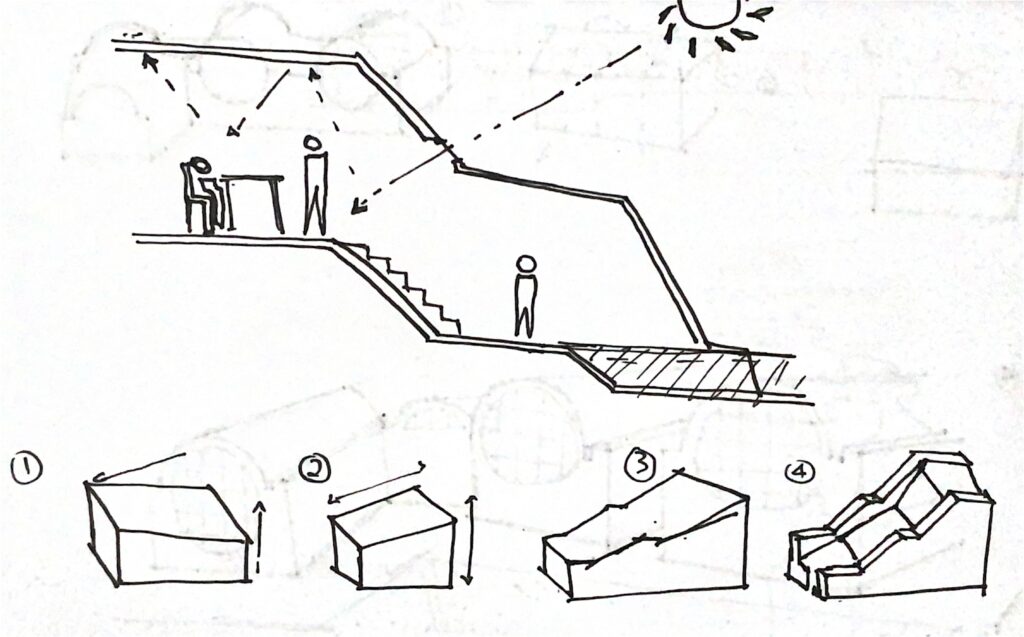
To make it easy to understand, when you start a project you can’t just be like, “I want a beautiful/unique building”. You have to have an idea of what exactly that project will have that makes it specifically beautiful/unique.
If you say, “I want the project to embody continuity through movement”, you might start getting ideas of connecting buildings and creating promenades throughout different spaces.
You can also say that you want your project to blend in with its surrounding, which leads your concept being something from the site (could be following the topography of the site, drawing inspiration from the surrounding of the site, etc) or even a contradiction from the site if you’re looking to make it stand out.
If you want to embody softness, you might want your project to avoid sharp edges and use waving lines through the plans, elevations, etc.
If you wish to offer views that are framed in a specific way, you might want to try the idea of fragmentation.
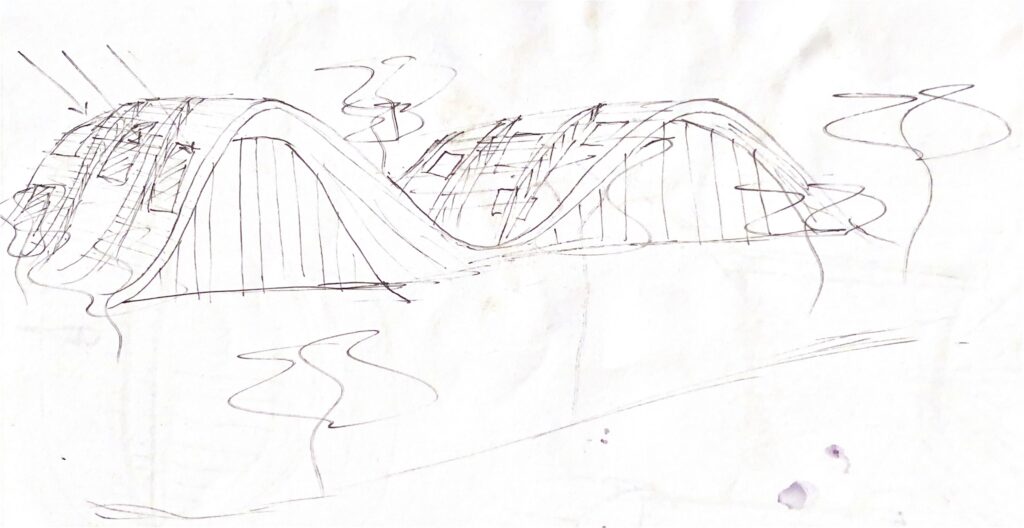
I could go on and on about different examples of generating your main idea behind your design choices, but to sum it simply; it is the very idea that you use as the foundation for all your other design ideas.
So that means your concept evolves, because you can’t just lay your foundation there and leave it and say it is complete, right?
As you come up with your very first idea, you will start exploring and coming out with even more ideas branching out.
Usually, the way you initially imagined your design idea changes as you think further and start designing, but the actual initial idea behind your design doesn’t change much, it just matures.
Now that we have understood what a concept is (hopefully), let us see how we can develop one.
I have to preface this part by saying that developing a concept is not a linear process, and it looks different for everyone based on different factors.
So what you will see here are some key guiding factors that will help you along as you try to define your fundamental idea for a design.
Every architect and architecture student knows this is the most important starting point of a project: doing analysis and research for the project.
The initial step is visiting the site to gather as much info as you can to scope out how your site works, and how the project you have to do will respond to the site and vice versa.
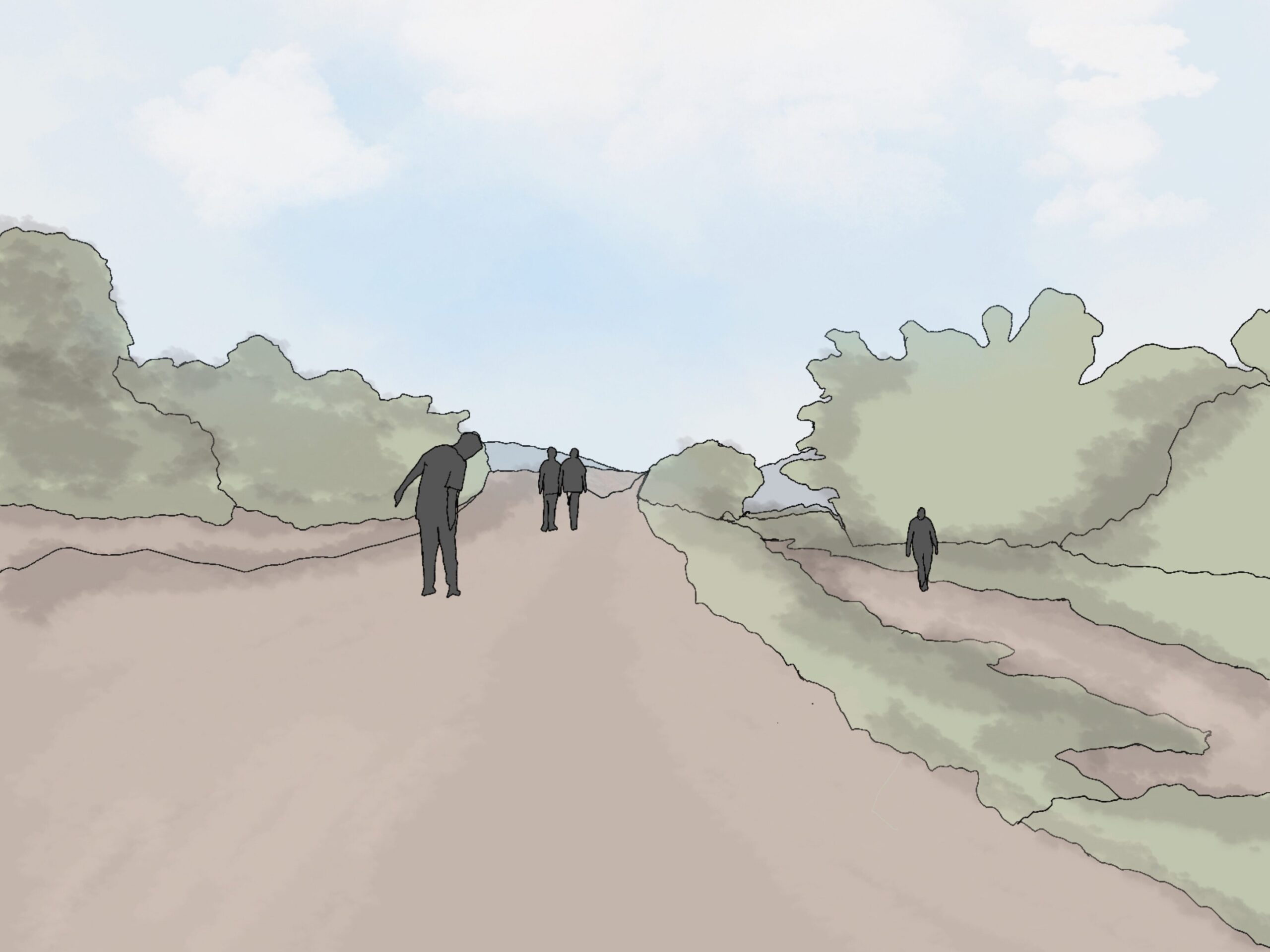
This is where you start imagining very roughly what you want to do with the site. In this phase, you usually have a rough project brief that also guides you to ask yourself the right questions as you start developing your concept.
I take as many pictures of the site as possible so that I can overlay sketches on them later as I test out my ideas.
After you have scoped out the site, you will start thinking of the nature of your project and start doing some precedent studies that will help you form your own idea based on what you learn that worked in them.
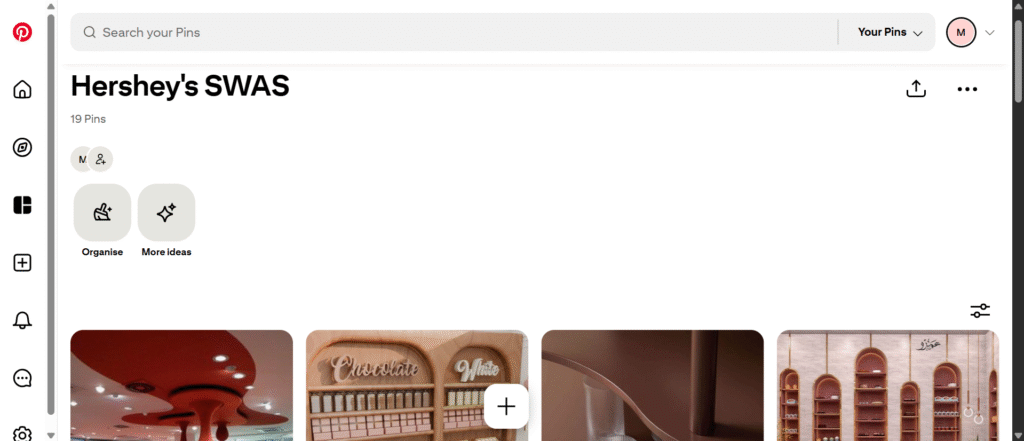
Here, I like to create a Pinterest moodboard to make it easy for me to determine the “vibe” I am going for, and just so that during design I don’t forget how I had envisioned the project at first and revisit that as I tweak my design.
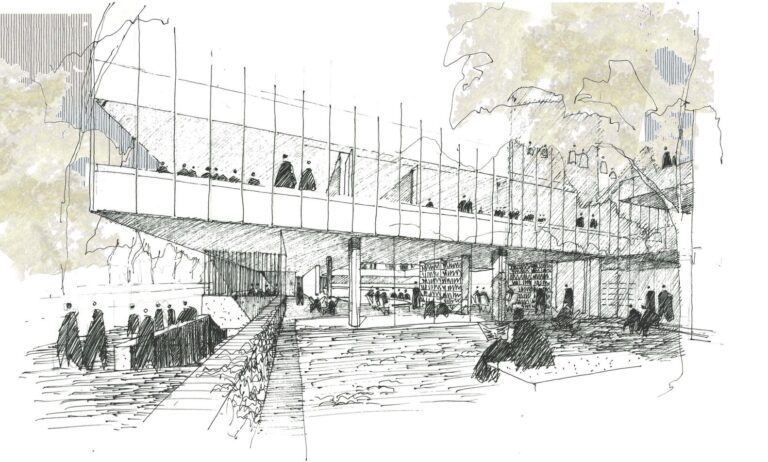
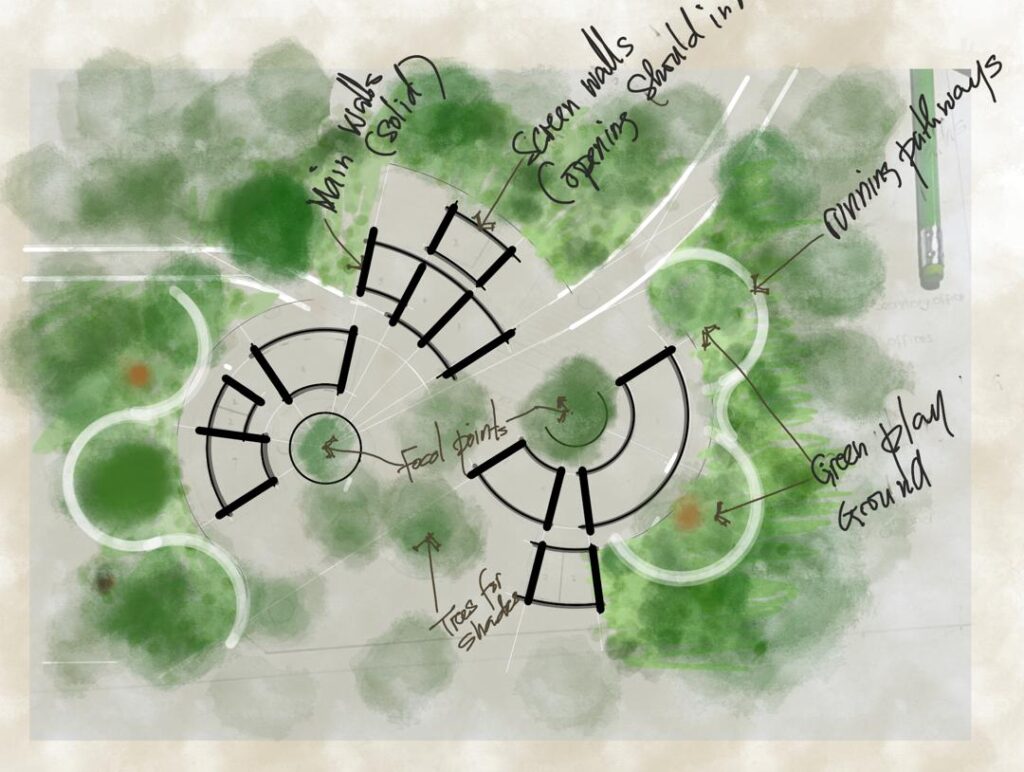
I also love sketching a lot in this phase, both to understand my vision in reality and get even more ideas that will form that one guiding idea.
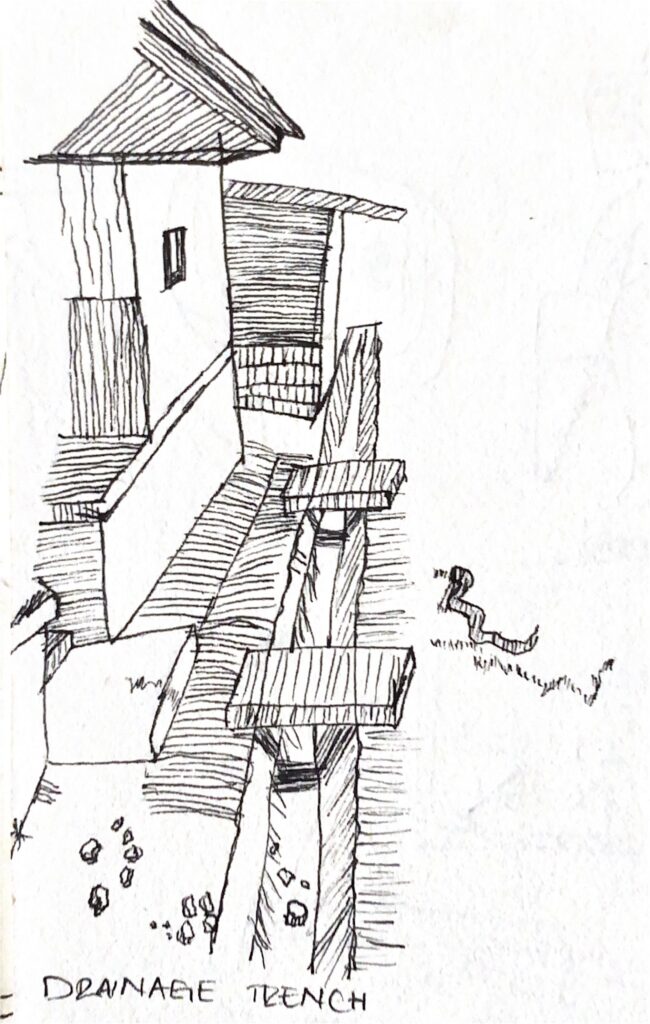
As I sketch, I jot down some notes that guide me in thinking of how to refine the ideas to fit the project brief.
I encourage you to do a lot of sketching, collage, and moodboarding if you really want to generate as many ideas as possible.
The conceptual development phase is the one phase that allows you to be as creative and imaginative as possible, so I try to take advantage of that in this phase.
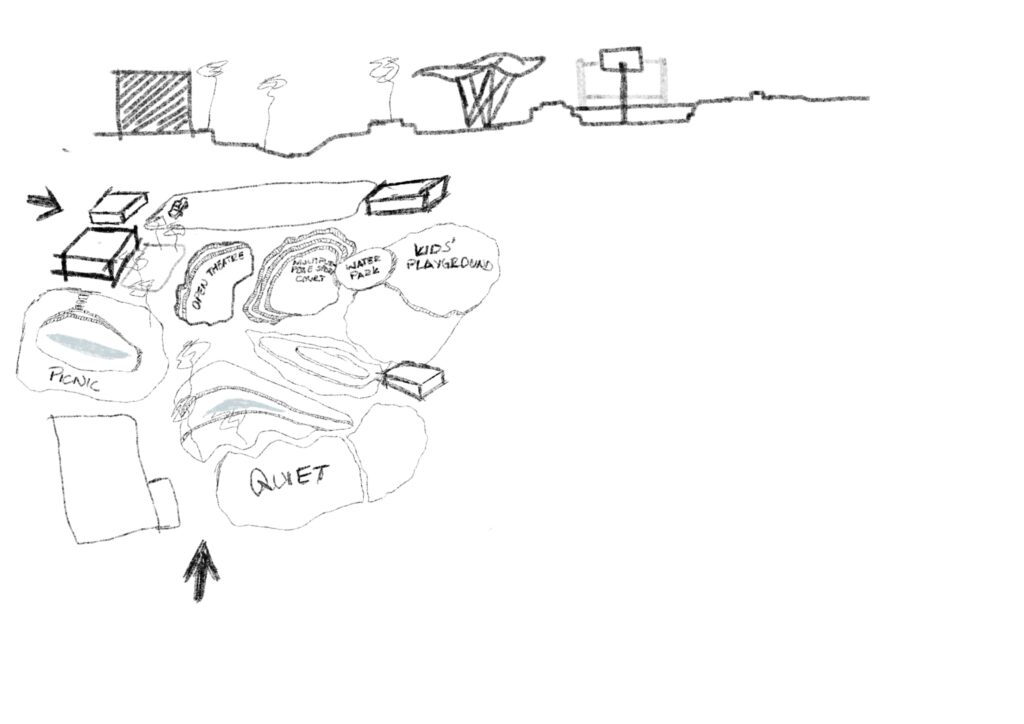
I have sketched, I have an idea of what I want to do, so now I narrow it down to get the strong fundamental idea.
This helps me to stay on track and not get lost in the phase of just sketching every possible idea I can think of.
It brings me closer to understanding one of those bazillion ideas I have had, and settling down on the one that I believe speaks most to my project brief.
I have now come up with my core concept, but it is not the end, because I have to test it out to see if my idea is feasible.
This is where I start overlaying my conceptual sketches on the site pictures I took.
I start taking into consideration different things like scale, sizes, spatial arrangement but in a very rough way just so I account for the bigger picture and make some design decisions early on.
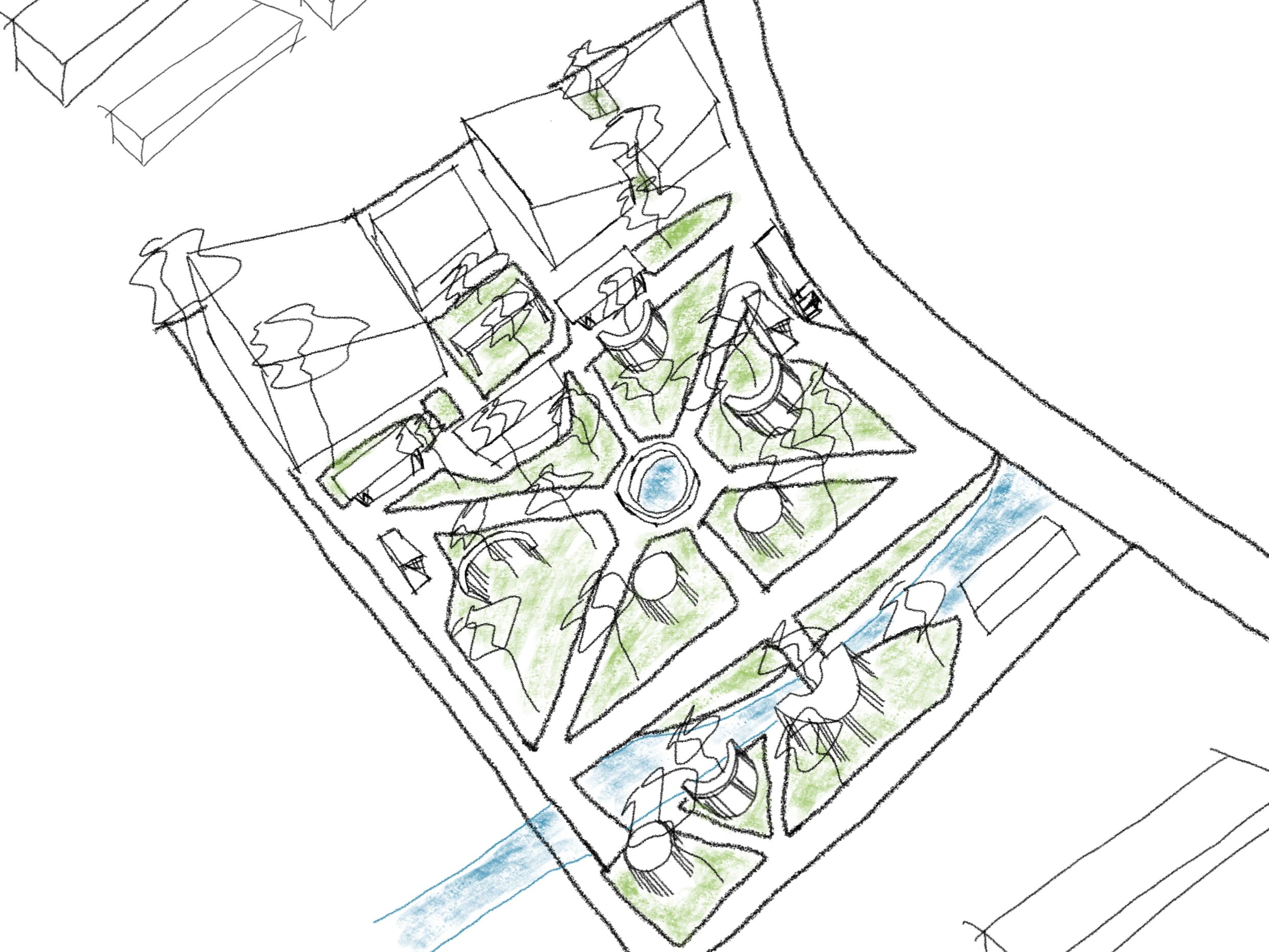
I keep sketching and iterating my sketches as my imagination gets sharper and more focused on the concept.
I also start doing some rough 3D modeling physically to catch on the scaling and lighting issues, etc so that I can readjust accordingly.
It’s basically a rinse and repeat process at this point, because I go back through the prior steps to see how I can refine my ideas.
As I keep reiterating and refining, there comes a point where I’m like: “yea this speaks to what I was imagining!”
This is where I can say that I have a concept.
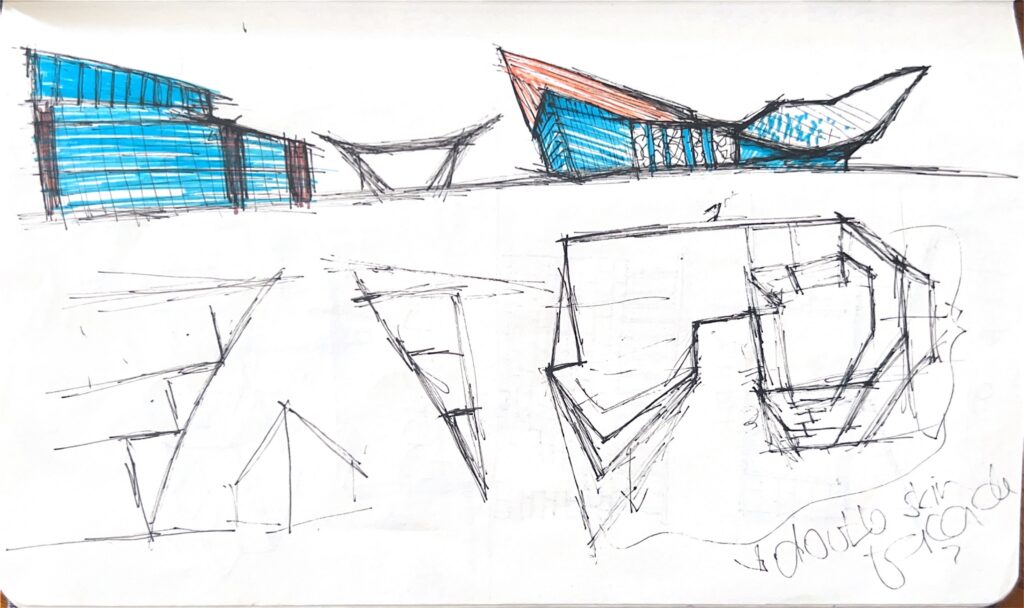
But keep in mind that the concept is just the beginning. You will keep refining and it will keep evolving as more factors come into the picture.
I have talked to different people who have different opinions on whether or not developing a concept is important, and most important: if they actually do it every time they’re embarking on a new project.
I got mixed answers, with some saying they don’t always do it, especially if they are doing projects with clients who need fast results and already know what they want.
Most agree that it is very important, but sometimes you meet a client who wants to stir you in a specific direction and doesn’t give you much room to express your creativity.
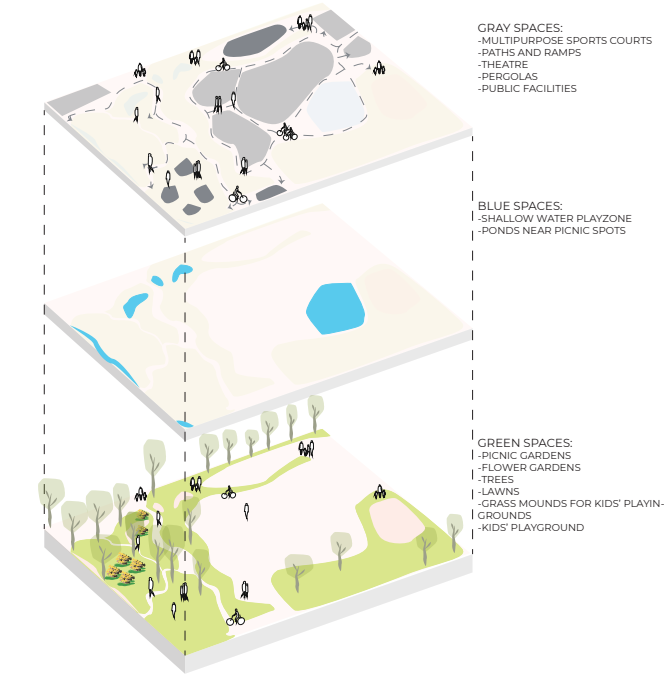
I personally try to always tell my client why we need to go through that process instead of jumping right into design so that we can make some design decisions early on and play with different iterations before settling on one idea.
Having a concept is not just going to help you define your design in a unique identity, but it is also going to allow you to identify early on the problems your design might meet and mitigate them before you’re in too deep.
It will help you visualize your ideas in a way that connects to reality and help you connect your project to the site context with a much better understanding.
You might be wondering how this section is any different from that of the process of conceptual development.
Here I will just give you some useful optional tips that will get you started and working through the concept development process.
Don’t let your mind tell you that you have read about it before and it’s enough, because each time you research you find a new thing that can inspire you. And definiitely, don’t rely on just one piece of research! Revisit as much as you can the ones you have and explore more leads/options.
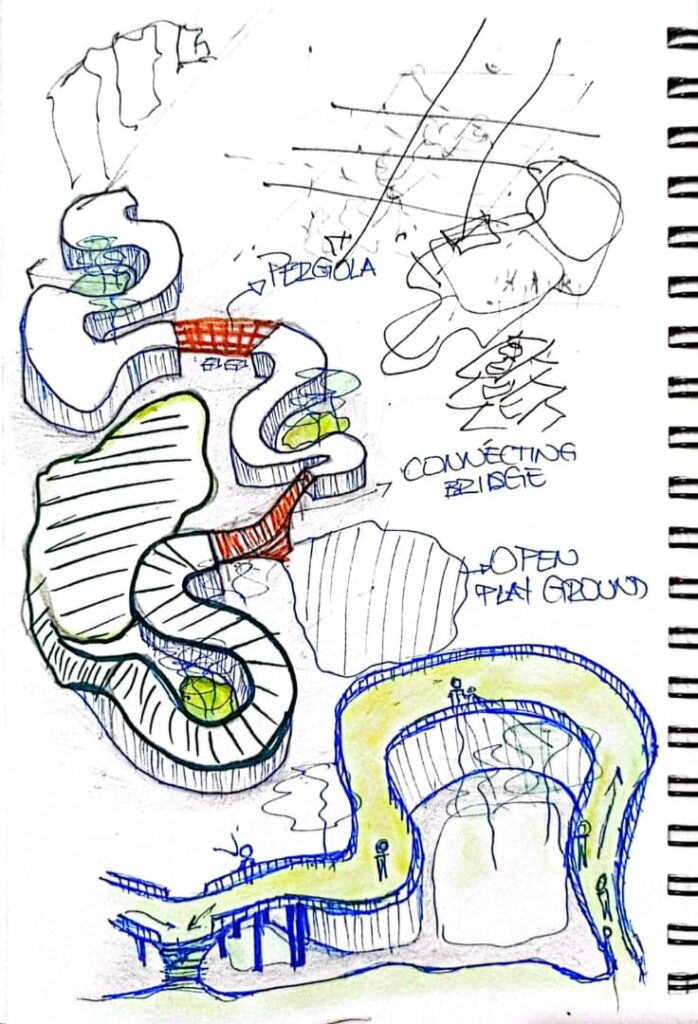
Some people believe sketching is for those who have drawing talent, but I promise you architectural sketching is something you can learn and train yourself to achieve. And if it doesn’t look like you imagine, keep trying until it does.
And don’t feel like it’s your final decision, because that subconsciously limits your imagination, and we have established that this part of the design process is the only place you’ll have full creativity and imaginative control as you possibly can.
When you take your mind off the stress and breathe, you’ll not only come back energized, but your brain will also be ready to have a fresh perspective.
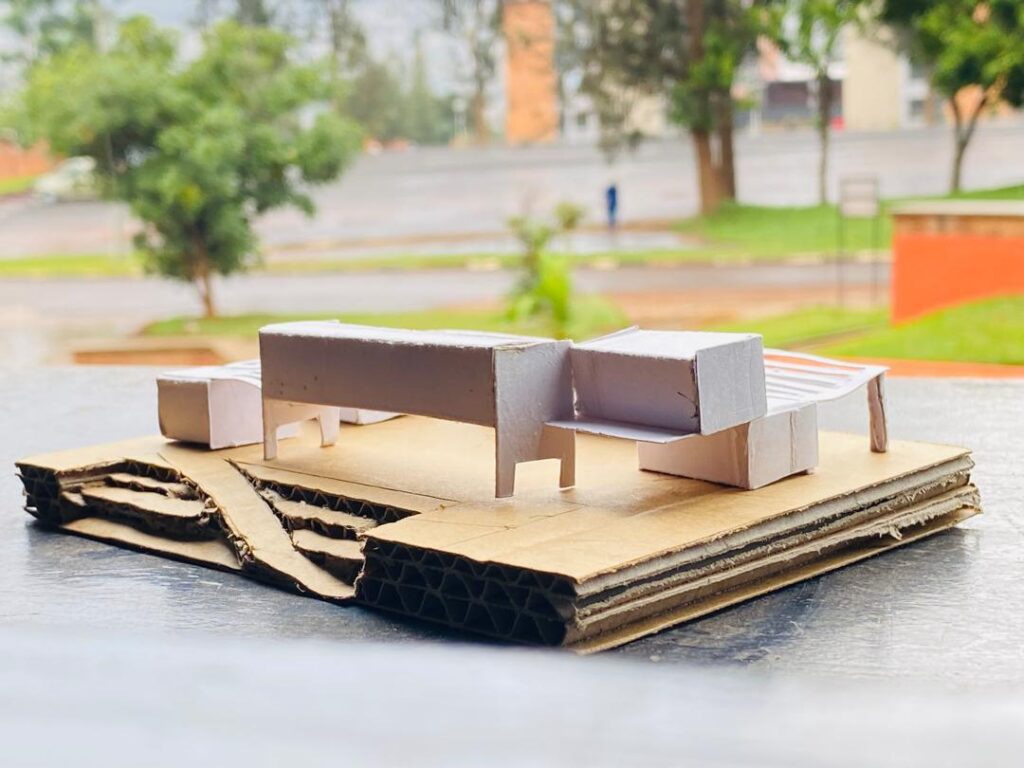
Make conceptual models (the roughest you can), try to sketch in perspectives and axonometry, and think of life in the spaces you’re designing because that will give you a narrative/story that you want your design to tell, and that will shape the experiences of your project’s users.
Try out different iterations before finalizing, and if none of them seem to be aligning with what you have in mind or what your client needs, let go of that idea, and approach the project in a new lens. Don’t be afraid to start over as many times as necessary until you have the right idea.
In the near future, I want to bring you a list of some common architectural concepts and tips on how to present your concept in a way that communicates your thoughts clearly, but today I want to stop by here.
I was supposed to post this blog post last weekend, but my schedule has been hectic and I did not want to bring out something half baked for the sake of keeping consistency, because, as much as I value consistency, quality is something I simply can’t overlook.
I may be returning to one weekly post until my schedule allows me to do more, but if I can I will still post twice sometimes.
I hope you enjoy reading through my thoughts, and please let me know if you have any questions for me. Or if you want to contribute to my growth by giving me crits and ideas on how to make this blog experience better, then I’m all ears!
See you soon!
All images © author