Physical Address
Kigali, Rwanda
Gasabo, Kimironko
Physical Address
Kigali, Rwanda
Gasabo, Kimironko
“So, do you just draw houses or do you build? I have a hard time differentiating your profession from an engineer’s!”
These, my friends, are the words I have heard more than once, and I would bet a heavy sum that I’m not the only one in this profession!
I remember when I first started architecture school, one of the very first things we were given was a definition of architecture
Now, I don’t exactly remember it word for word, and honestly, I don’t think I ever tried to memorise it.
But I do remember the essence of it. It was something about architecture sitting somewhere between art and science.
At the time, that felt poetic enough, and I moved on, too eager to practice what I had been dreaming of ever since I was in high school.
As school went on, the language became heavier.
We started talking about principles of design, elements of design, order, hierarchy, rhythm, balance. A whole lotta professional jargon.
We spoke about structure. Climate. Function. Circulation. Sustainability. Feasibility. Hardscape vs softscape. Everything had a name. Everything had a theory behind it.
Sometimes it felt like we were learning a new language just to justify what we were doing!
And I think that’s where this question started to quietly sit in the back of my mind.
Is architecture an art? Is it a science? Or is it something else entirely?
There’s something so ever comforting about definitions.
They give us something solid to hold onto, especially in a field that can feel very subjective(because, at the end of the day everyone has different tastes when it comes to the construction industry).
Calling architecture a science makes it sound precise and respectable. It aligns us with engineers, calculations, standards, and logic.
It reassures clients that we are not just making things up.
Calling architecture an art, on the other hand, gives us permission to feel. To experiment. To talk about emotion, experience, beauty, and meaning.
So we say it’s both. And in many ways, that’s true.
But I’ve started to wonder if repeating that line sometimes becomes performative. Like we’re reciting it because it sounds right, not because we’ve actually sat with what it means.
What does it say about us when we hide behind professional jargon instead of explaining what we do in human terms?
If you’ve ever tried explaining architecture to someone outside the field, especially in a developing context where it is still a “niche” profession, you’ll know what I mean.
People ask questions like: “So… do you just draw?” And then you plead your case because that is such a criminal minimization.
“Isn’t that what engineers do?” This one boils my blood, because, no! I’m not trying to discredit engineers, they really do great work, but no we don’t do the same thing(clients only get this when they bring back their design proposals from engineers and need me to correct them lol).
“What’s the difference between you and a contractor?” is another favorite question, because suddenly (especially in Kinyarwanda), all those neat definitions fall apart.
You realise that saying “architecture is the synthesis of art and science” doesn’t actually answer anything for the person asking. It just sounds impressive.
Sometimes I think we lean into complex language not because it’s necessary, but because it protects us. It creates distance. It makes us feel legitimate in a world that doesn’t always understand what we do.
But architecture is not meant to be distant. It’s one of the most intimate professions there is. It shapes how people live, move, gather, rest, and belong.
So why do we talk about it like it’s untouchable?
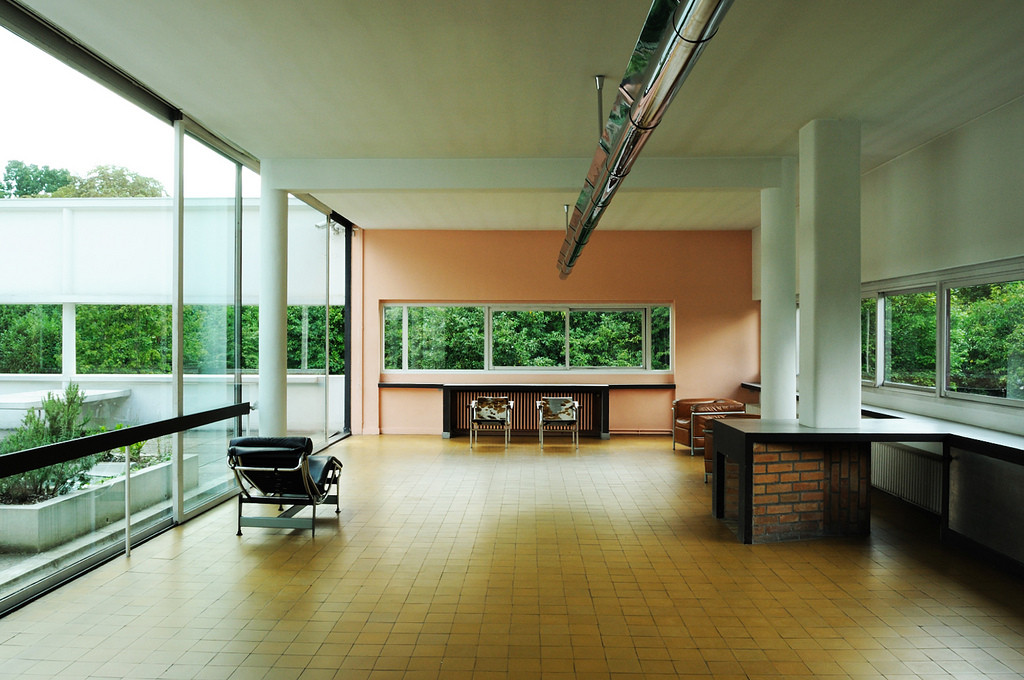
The truth is, architecture cannot survive as only art. A beautiful building that leaks, overheats, or collapses has failed, no matter how poetic the concept was (I’m definitely not looking at the Villa Savoye or anything…)
At the same time, architecture cannot survive as only science. A perfectly calculated building that ignores how people feel inside it, how they move through it, or how it sits within its community is equally unsuccessful.
But reducing architecture to a simple balance between the two still feels incomplete.
Architecture is decision-making. It’s a translation. It’s taking human needs, emotions, constraints, budgets, climates, and cultures and turning them into space.
That’s not just art or science. That’s interpretation.
There will come a time in your life as an architect when someone asks you what’s the point of hiring an architect when an engineer exists.
It is very important that you know to position yourself when this happens. Especially in a context that constantly questions what you do. And who you are.
If we only see ourselves as artists, we risk being dismissed as idealistic or impractical.
If we only see ourselves as technical experts, we lose the emotional and social responsibility of our work.
And if we hide behind language that sounds impressive but says very little, we risk disconnecting from the very people we are meant to serve.
Architecture is not about proving intelligence. It’s about understanding life and responding to it thoughtfully.
Maybe the better question is: Why are we so eager to fit it into a box?
Architecture is a way of thinking about the world.
It’s a way of observing people, systems, and spaces, then asking how they could work better together.
Sometimes that requires creativity.
Sometimes it requires calculation.
Most of the time, it requires humility.
And maybe that’s the part we don’t talk about enough.
If you’re back here in 2026, first of all, happy new year! I have missed you all so much, and after a well deserved break I am back to deliver on my promises!
Writing this piece was like sitting down and opening a part of my mind to you, and I’m glad this is how I’m introducing Atelier Blooming into this new year. I hope it was a fun and thought-provoking read.
I will be seeing you soon again, as I try to settle into our regular rhythm, with a few more surprises under my sleeves though, lol! Stay tuned, and ciao!